
Moog G772 K620 Hydraulic Servo Valve
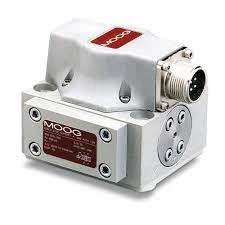
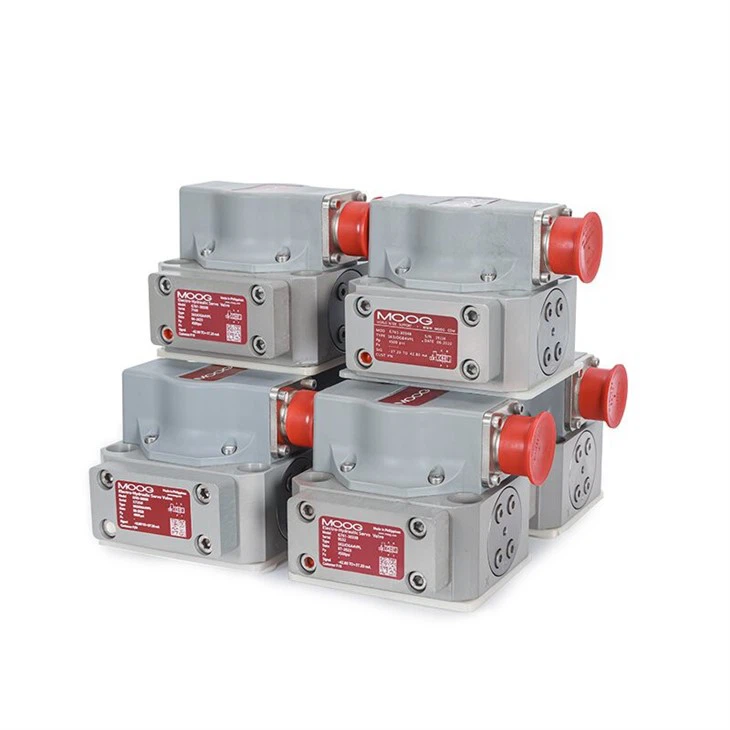

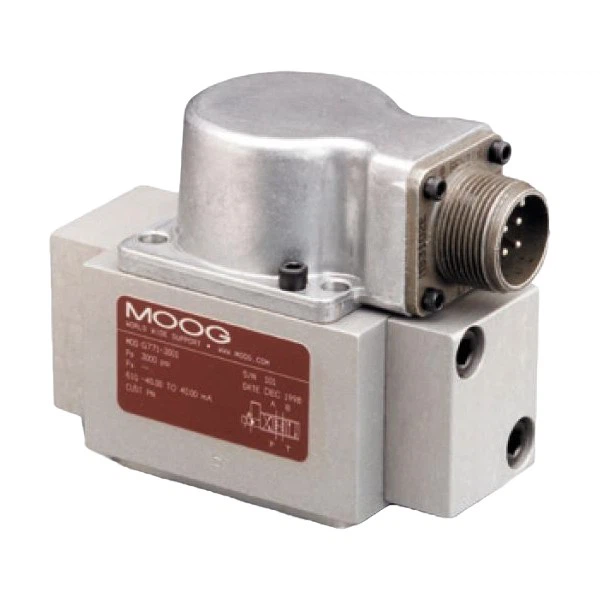
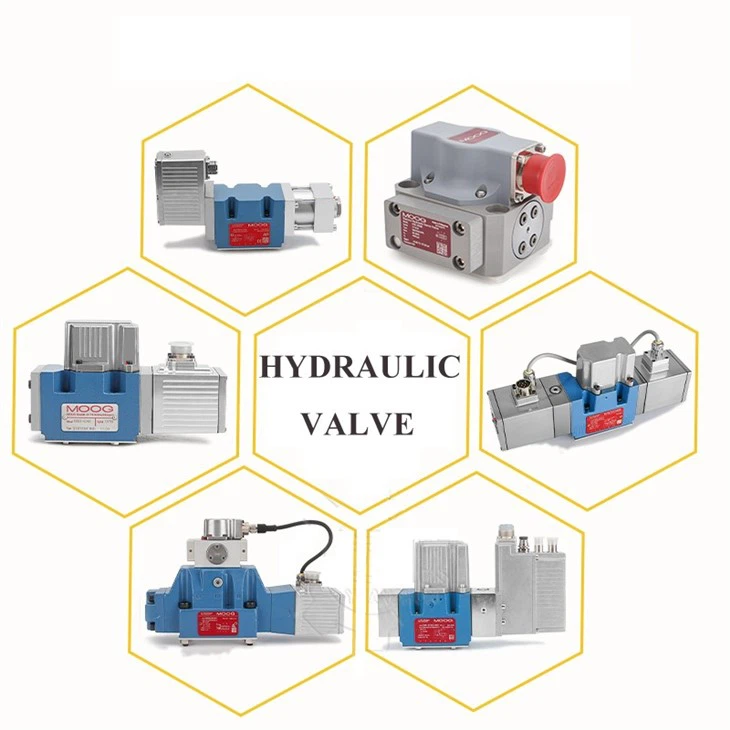
Description:
share:
Advantages of the Moog G772 K620 Hydraulic Servo Valve
-
High Precision & Low Hysteresis
The valve’s two-stage design with a nozzle-flapper pilot and low-friction spool delivers extremely fine control, improving accuracy in sensitive applications. -
Fast Dynamic Response
With step response times in the low milliseconds (4–17 ms) and broad frequency response, the G772K620A supports rapid actuation and dynamic load conditions. -
Wide Temperature & Harsh Environment Tolerance
Operable from –40 °C to +135 °C, and built to survive high shock and vibration (30 g), making it suitable for rigorous industrial environments. -
Robust, Long‑Life Design
The spool-and-bushing architecture offers durability, and the external design supports field-adjustable null bias, reducing maintenance needs. -
Safety & Reliability
Built-in failsafe: loss of electrical signal returns the valve to center (zero flow), enabling predictable and safe shutdown in control systems. -
Fluid Compatibility
The design is compatible with a variety of hydraulic fluids, thanks to the dry torque motor and robust sealing materials (Viton, etc.).
| Parameter | Specification |
|---|---|
| Model / Part Number | G772K620A (G772 K620) |
| Valve Type | 2‑stage servo valve, spool & bushing |
| Pilot Design | Nozzle‑flapper |
| Mounting Surface | ISO 10372-03-03-0-92 |
| Installation Orientation | Any (fixed or movable) |
| Weight | ~ 0.86 kg (1.9 lb) |
| Operating Temperature | –40 °C to +135 °C ambient |
| Storage Temperature | –40 °C to +60 °C |
| Vibration Resistance | 30 g, 3‑axis, 10 Hz to 2 kHz |
| Shock Resistance | 30 g, 3‑axis |
| Seal Material | Fluorocarbon (FKM, Viton™ B) |
| Hydraulic Flow / Rated Flow | According to G772-series spec: 1.9 to 57 L/min depending on variant |
| Max Operating Pressure | Up to 350 bar (for certain models) |
| Electrical Signal | Rated currents from 8 mA to 200 mA for G-series |
| Dynamic Response | 100% step response: ~4–17 ms (depending on sub-model) |
| Frequency Response | Typical: ~115 to 215 Hz (phase lag spec) |
| Special Features | – High resolution / low hysteresis – Field-adjustable null bias – Fail-safe to center (zero input → zero flow) |